

Forex trading is based on changes in the exchange rate between two currencies. Instead of asking what one currency is worth on its own, the market asks what it is worth relative to another currency. That relationship is shown as a currency pair, such as EUR/USD, GBP/USD or USD/JPY.
The global foreign-exchange market connects banks, businesses, governments, investment institutions and other participants that need to exchange currencies or manage currency risk. The Bank for International Settlements reported that average daily turnover in over-the-counter foreign-exchange spot and derivatives markets reached approximately US$9.5 trillion in April 2025. That scale does not make every trade easy to execute, however. Liquidity, spreads and price behaviour can still change by currency pair, session and market condition.
Forex is a market of relative prices
An exchange rate compares two currencies. In the pair EUR/USD, the euro is the base currency and the US dollar is the quote currency. If EUR/USD is quoted at 1.1000, one euro is valued at 1.10 US dollars.
If EUR/USD rises from 1.1000 to 1.1050, the euro has strengthened relative to the US dollar. If it falls to 1.0950, the euro has weakened relative to the dollar. This does not necessarily mean that one currency is rising or falling against every other currency. A currency can strengthen against one counterpart while weakening against another.
Major, minor and other currency pairs
Currency pairs are often grouped according to the currencies involved and the way the market commonly discusses them. Major pairs usually include the US dollar and another widely traded currency. Crosses combine two currencies without the US dollar, while other pairs may include currencies with lower trading activity or more variable liquidity.
These labels are useful for navigation, but they do not guarantee a particular spread, level of liquidity or trading condition. The relevant RG product schedule and instrument specification determine what is available through an account.
Bid, ask and spread
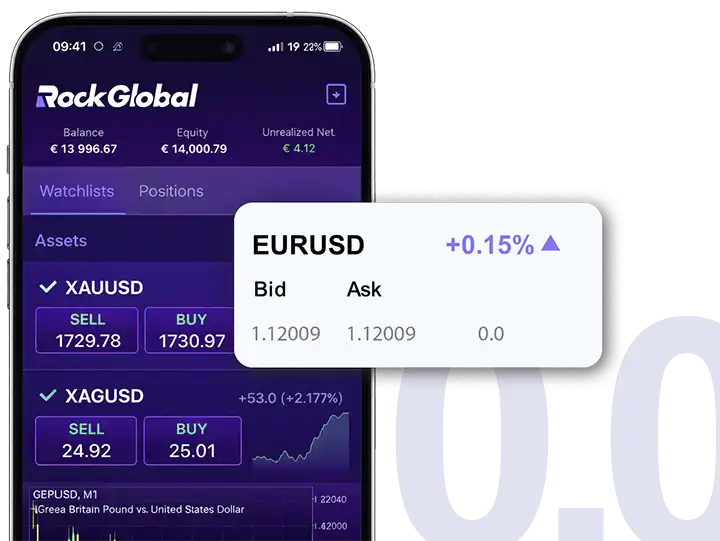
A forex quote normally contains a bid price and an ask price. The bid is the price available for selling, while the ask is the price available for buying. The difference between them is the spread.
The spread is one part of the cost and execution context. It can vary between instruments and may change when liquidity is lower, uncertainty increases or prices are moving quickly. A chart can therefore look active while the nearby price available for an order is changing.
Why exchange rates move
Exchange rates reflect changing expectations about two economies and two currencies. No single indicator explains every move, and relationships that appear strong in one period can weaken or reverse in another.
Monetary policy and interest-rate expectations
Central banks influence short-term interest rates and communicate how they view inflation, employment and economic activity. Markets respond not only to a policy decision but also to how that decision compares with expectations. The relative path between two central banks can matter more to a currency pair than either policy rate considered alone.
Economic information
Inflation, employment, economic growth, business activity and trade data can change expectations about an economy and its policy outlook. A release may produce little reaction when it matches expectations, or a larger repricing when the result or accompanying detail is unexpected.
Capital flows and risk sentiment
Investment flows, hedging activity and demand for particular assets can affect currencies. During periods of uncertainty, market participants may reduce risk, protect international portfolios or seek currencies they consider more liquid. These behaviours can change as new information arrives.
Liquidity and market timing
The foreign-exchange market follows the working day across Asia-Pacific, Europe and North America rather than opening on one central exchange. Participation changes as financial centres open, overlap and close. This can affect trading volume, spreads and the speed at which prices respond.
How a forex CFD position works
A forex contract for difference, or CFD, is a derivative linked to movement in a currency-pair reference price. It provides price exposure without delivering the underlying currencies to the client. The result is based on the direction of the position, the size of the price movement, the position size and the costs or adjustments that apply.
A long EUR/USD position benefits from an increase in the pair before costs and loses value if the pair falls. A short EUR/USD position follows the opposite relationship. The ability to take either direction does not reduce risk: the market can move against either position.
Forex CFDs are over-the-counter derivatives provided under the terms of the relevant issuer rather than ownership interests traded on a central securities exchange. Product availability, symbols, contract sizes, trading hours, margin requirements and execution settings must therefore be confirmed in the applicable RG specification.
Position size, pips and gross movement
A pip is a commonly used measure of a currency pair’s price movement. For many pairs, one pip is 0.0001. Pairs involving the Japanese yen are commonly discussed using 0.01 as one pip. The monetary value of a pip depends on the pair, position size, account currency and applicable conversion.
Consider an illustrative long position representing 10,000 units of EUR/USD. A move from 1.1000 to 1.1050 is 50 pips and would produce a simplified gross movement of approximately US$50. A fall from 1.1000 to 1.0950 would produce a simplified gross loss of approximately US$50. This example assumes a US-dollar result and excludes spread, commission, financing, slippage, conversion and other costs. It is not an RG contract specification or execution forecast.
For a USD/JPY example, the pip position is different because the quote convention uses two decimal places for a pip. This is one reason traders should check the instrument’s digits, contract size and tick or pip value instead of assuming every pair behaves identically.
Margin and leverage change the account impact
Forex CFDs are generally margin-based products. Margin is the amount required to support a position, while leverage describes the relationship between the position’s exposure and the margin committed.
Leverage does not change the profit or loss produced by an unchanged nominal position. It allows a larger exposure to be supported by a smaller amount of margin. As a result, the gain or loss can be large relative to the funds supporting the trade. If account equity falls, additional margin requirements or position close-out rules may apply according to the account and product terms.
Before opening a position, it is useful to distinguish:
- Position exposure: the economic size affected by the market move.
- Required margin: the funds reserved to support that exposure.
- Account equity: the account value after open profit and loss.
- Free margin: the remaining funds available to support positions or new orders.
These values are connected, but they are not interchangeable. A small margin requirement does not mean the potential loss is small.
Orders, stops and execution
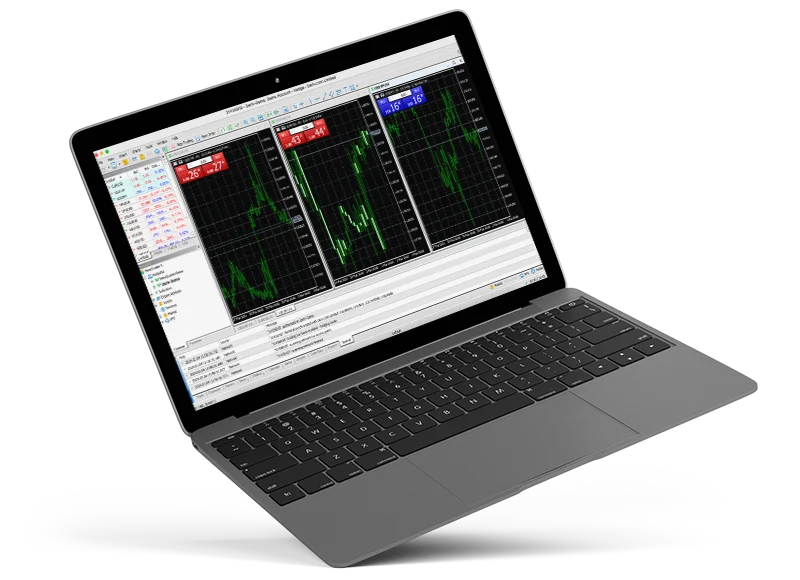
MetaTrader 5 distinguishes between an order, a deal and a position. An order is an instruction sent for execution, a deal records the resulting transaction and a position represents the resulting market exposure. Available order types and execution settings depend on the instrument and broker configuration.
A market order requests execution using the available market. A pending order becomes eligible when its specified conditions are met. Stop-loss and take-profit instructions can help define an intended exit, but they do not guarantee execution at the selected level.
When prices move quickly, liquidity changes or the market gaps, the next available execution price may differ from the trigger or price visible when the instruction was submitted. This difference is commonly called slippage and can be favourable or unfavourable. Order size and available liquidity can also affect whether an order is filled in one or several transactions.
Costs to understand before trading
The market direction is only one part of the result. Depending on the account and instrument, the following may apply:
- Spread: the difference between the bid and ask prices.
- Commission: a separate transaction charge where the account terms specify one.
- Financing or swap: an adjustment that may apply when a position remains open across the product’s rollover time.
- Currency conversion: conversion may be required when the position result and account currency differ.
- Slippage: the difference between an expected or triggered price and the available execution price.
Costs can change the break-even point and can accumulate when positions are held for longer periods or traded frequently. The current account terms and product specification should be reviewed rather than relying on a general example.
A practical starting checklist
- Identify the base and quote currencies and confirm what a rise or fall means.
- Check the instrument specification, trading hours, contract size, margin and applicable costs.
- Understand the scheduled events and market sessions that may affect liquidity or volatility.
- Choose a position size by considering the exposure and potential loss—not only the required margin.
- Decide how the position will be monitored and what conditions would invalidate the original reasoning.
- Review how market, pending and stop instructions operate before using them.
Forex trading becomes clearer when the quote, exposure, costs and execution process are considered together. Readers who want to examine the product pathway can explore the RG Forex market page, review the MetaTrader 5 trading environment, learn how leverage and margin work and understand spreads and execution.